
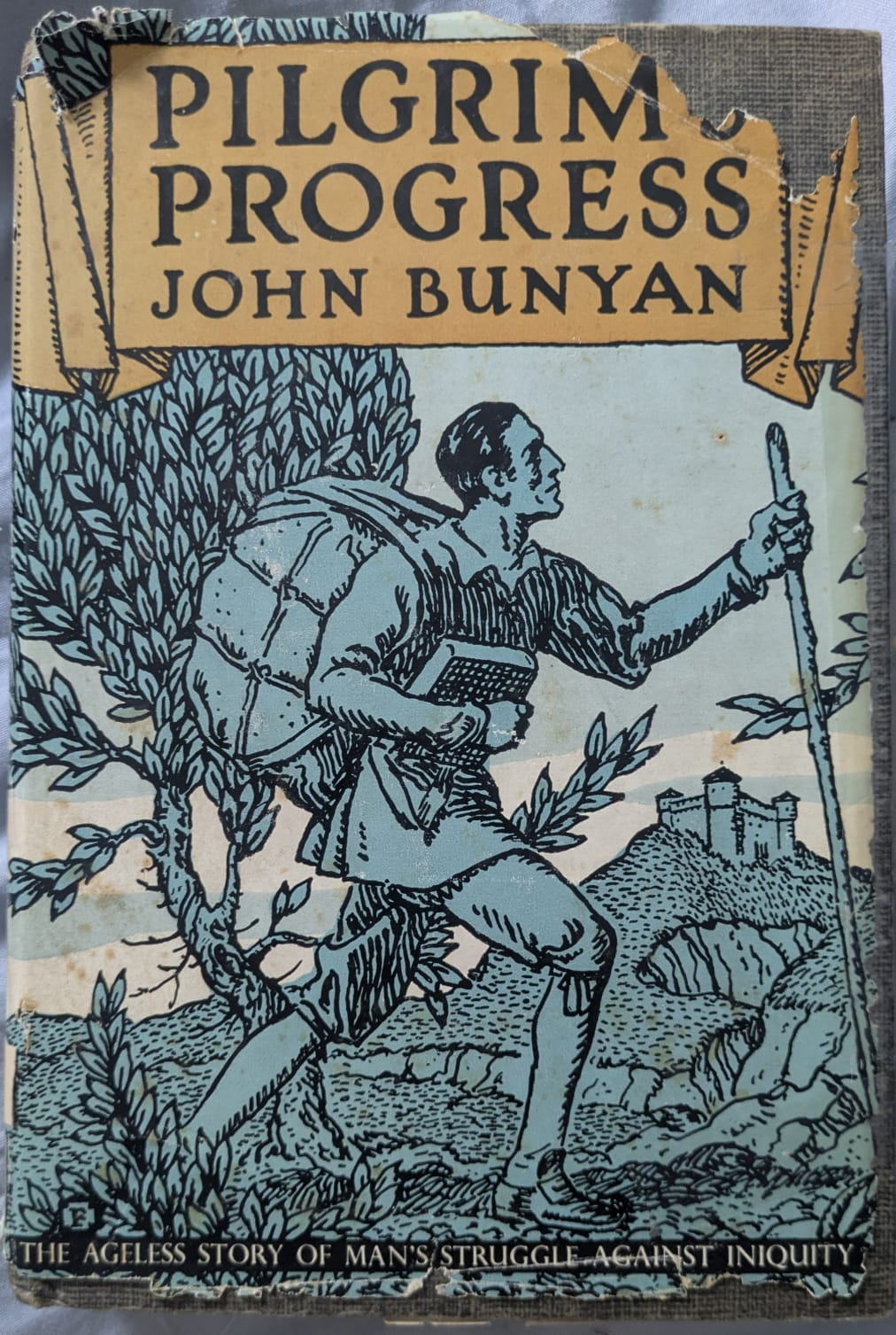
I’ve now finished working through The Pilgrim’s Progress chapter by chapter, and after sitting with it for a little while, I can say plainly that it is one of those books that stays with you. It is simple enough to follow, yet deep enough to keep pressing on the conscience long after you’ve put it down. What Bunyan gives us is not just a story, but a spiritual mirror.
What struck me most through the whole book was how true it feels to real Christian experience. The names may be old, the setting may be allegorical, and the events may be shaped as a dream, but the spiritual reality behind them is timeless. The burden of sin, the pull of the world, the danger of false religion, the weariness of the road, the comfort of fellowship, the fierceness of spiritual conflict, and the steady hope of the Celestial City; all of it rings true. Bunyan understood that the Christian life is not a straight line of ease, but a narrow path marked by grace, warning, correction, hardship, and help.
One of the book’s great strengths is the way it makes spiritual dangers unforgettable. Men like Obstinate, Pliable, Mr. Worldly Wiseman, Talkative, Mr. By-ends, and Ignorance are not just characters in a story. They are pictures of attitudes and voices that still surround us, and, if we are honest, sometimes rise up within us. That is part of what makes the book so valuable. It does not merely describe error in theological language. It gives it a face, a voice, and a path. It shows how easy it is to be near the things of God and yet miss Christ Himself.
I also appreciated how clearly the book keeps bringing the reader back to first things. The Wicket Gate, the Cross, the losing of the burden, the armour for battle, the necessity of pressing on, the need for true companions, and the warning not to turn aside for easier roads. Bunyan never lets the heart drift too far from the central realities of salvation and discipleship. Even when the journey becomes dark or difficult, the message remains the same: the Lord knows the way, and the pilgrim must keep going by faith.
Another part of the book that stood out to me was its seriousness. The Pilgrim’s Progress is encouraging, but it is not soft. It is comforting, but it is not casual. Bunyan writes as a man who knows that heaven is real, hell is real, deception is real, and eternity is not a small matter. That seriousness is one of the reasons the book still has weight. In a time when so much reading is shallow and quickly forgotten, this book asks the reader to stop, examine, and consider where he truly stands.
At the same time, it is not a book of despair. For all its warnings, it is full of hope. Christian is helped, corrected, guarded, strengthened, and carried through. He is not upheld by his own strength, but by grace given at every necessary point. Whether at the Cross, in the Palace Beautiful, in the battle with Apollyon, through the Valley of the Shadow of Death, or at the river’s edge, the book keeps showing that the pilgrim’s safety is never found in self-confidence, but in the mercy and faithfulness of God.
If I had to sum the book up simply, I would say this: The Pilgrim’s Progress is one of the clearest and most searching pictures of the Christian journey outside of Scripture itself. It is not a replacement for the Bible, of course, but it is a powerful companion to it. It helps put flesh on many truths the Word of God already teaches.
I’m glad I took the time to work through it slowly rather than rushing it. Read that way, chapter by chapter, its lessons have room to settle. It is a book I would gladly recommend to any Christian, especially to those who want something devotional, thoughtful, and spiritually sharpening. It does not flatter the reader, but it does help him. And in the end, that is one of the best things a book can do.